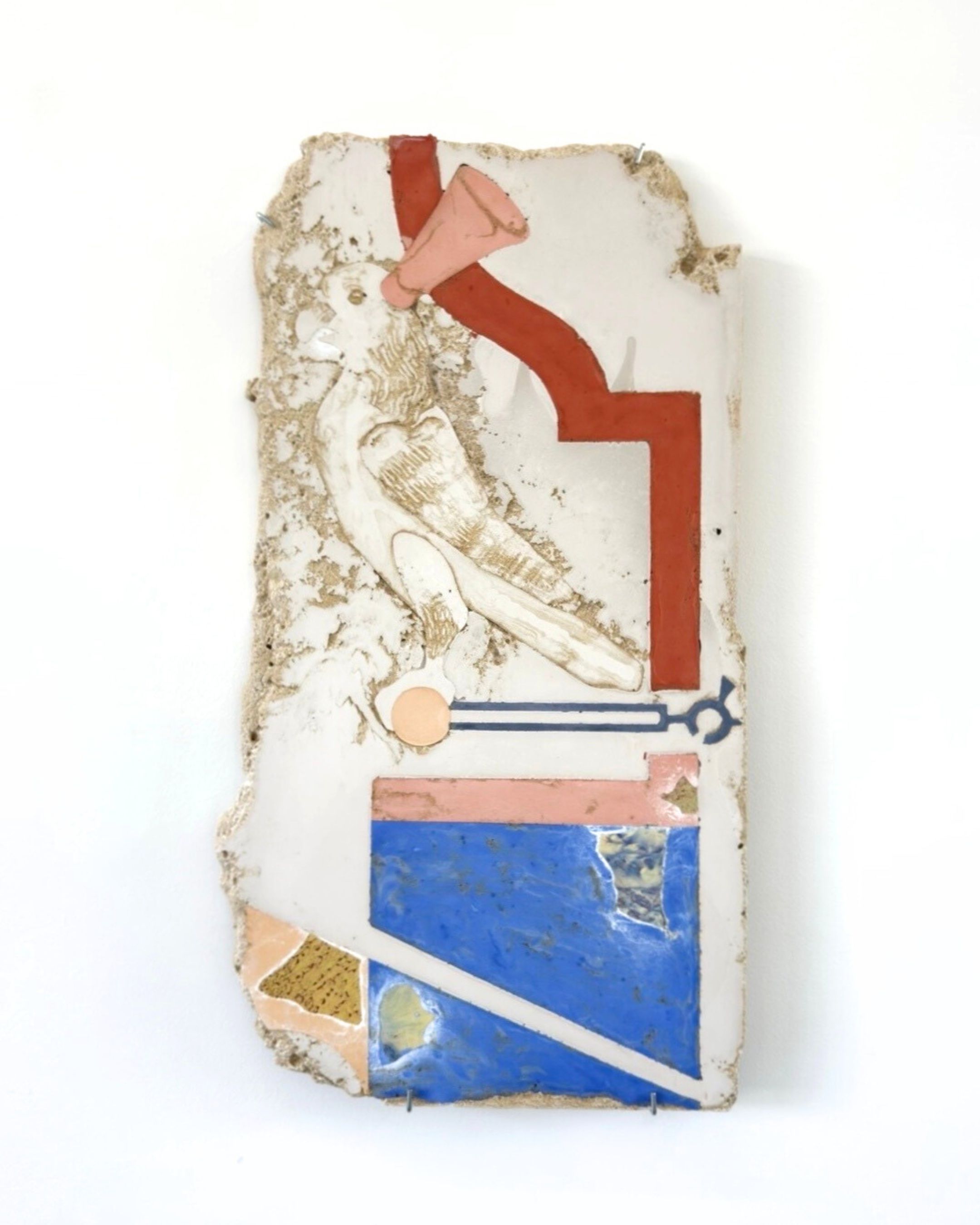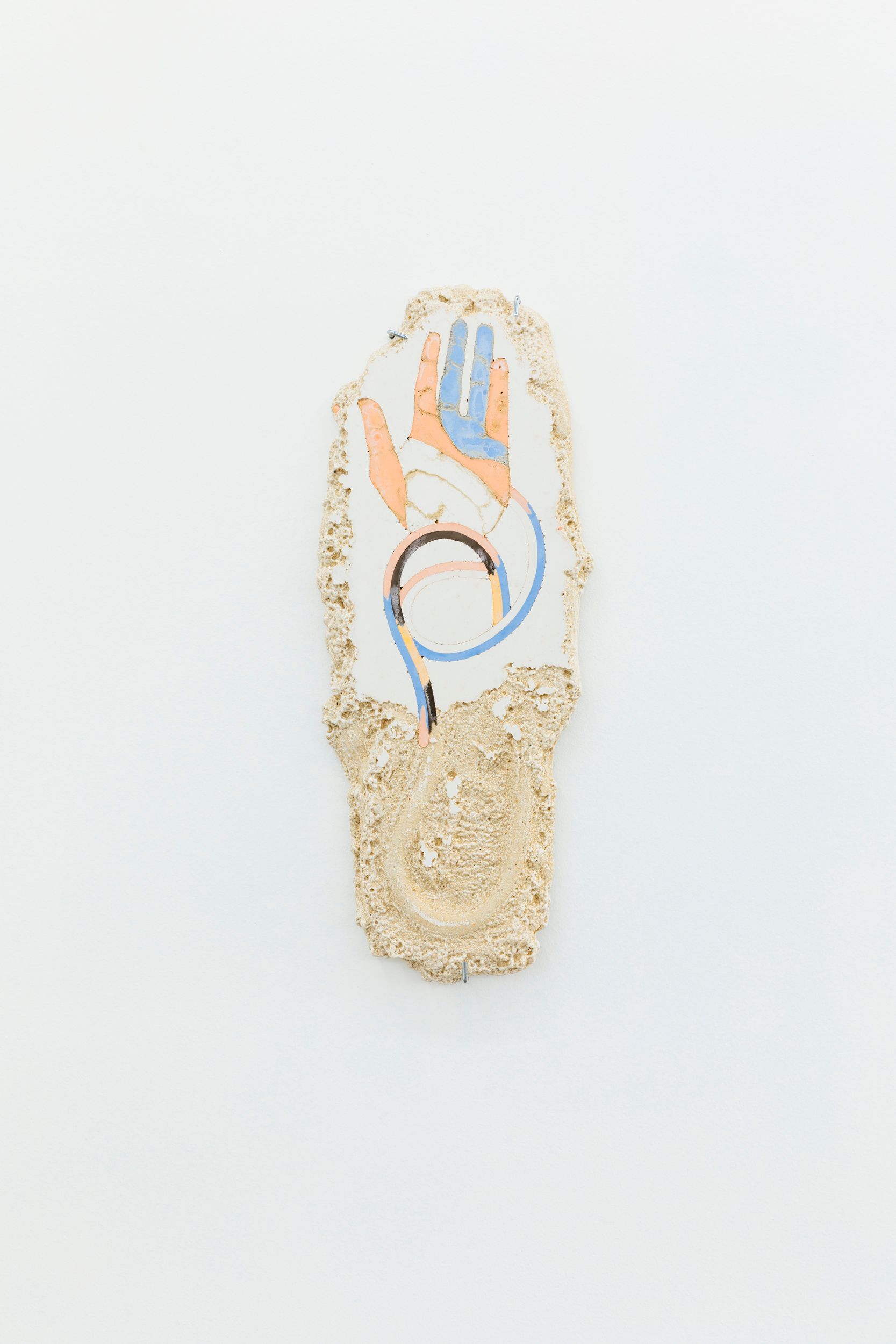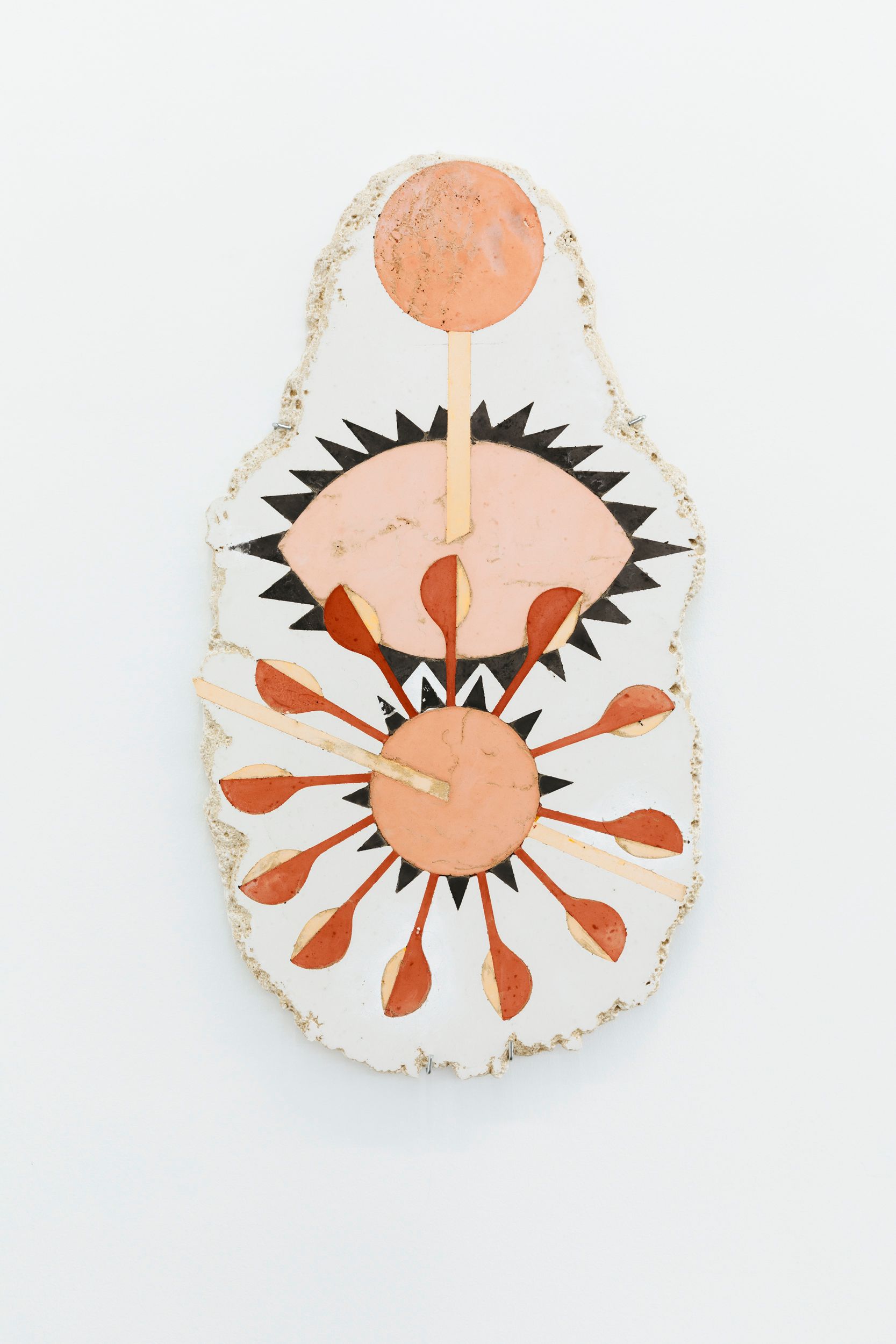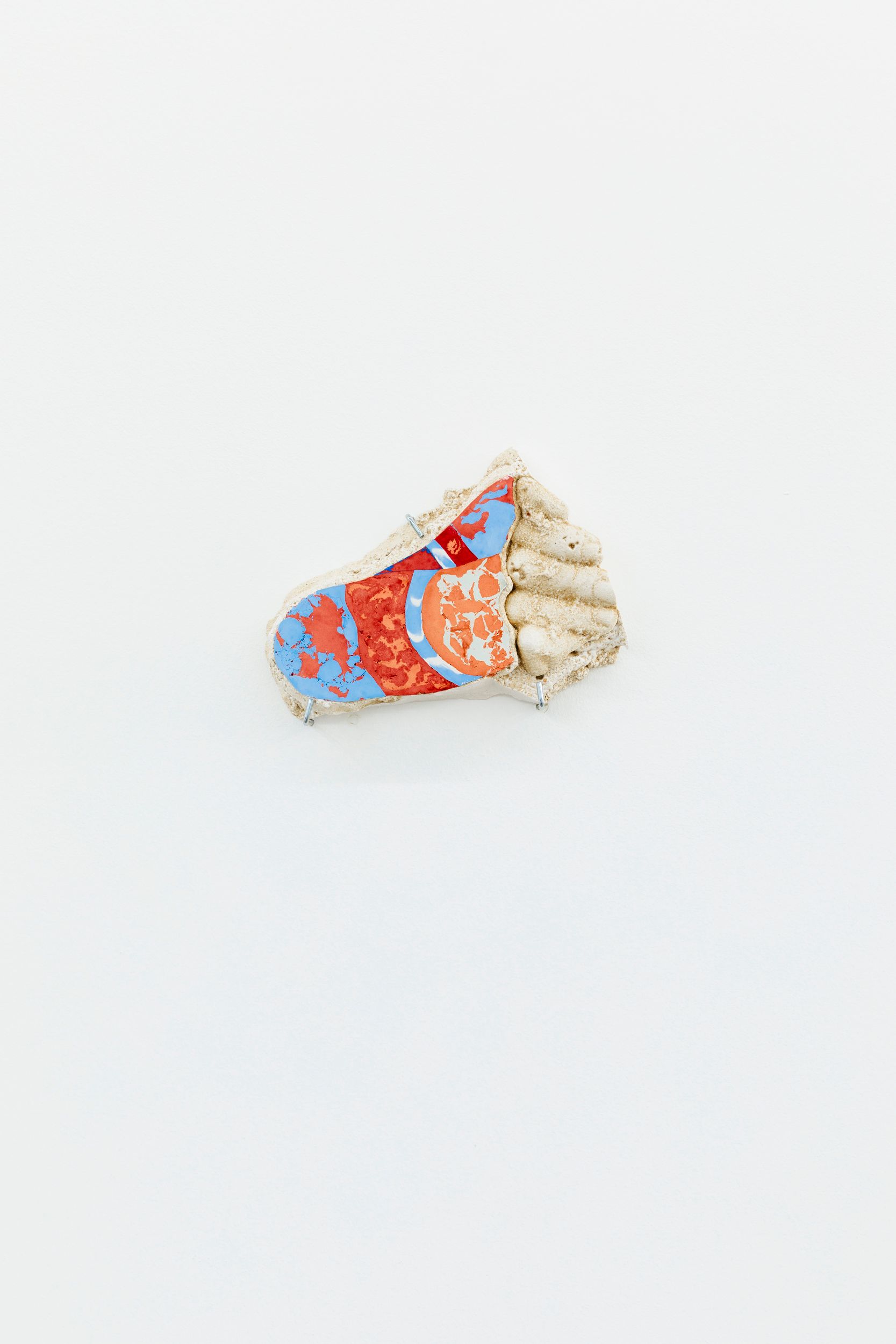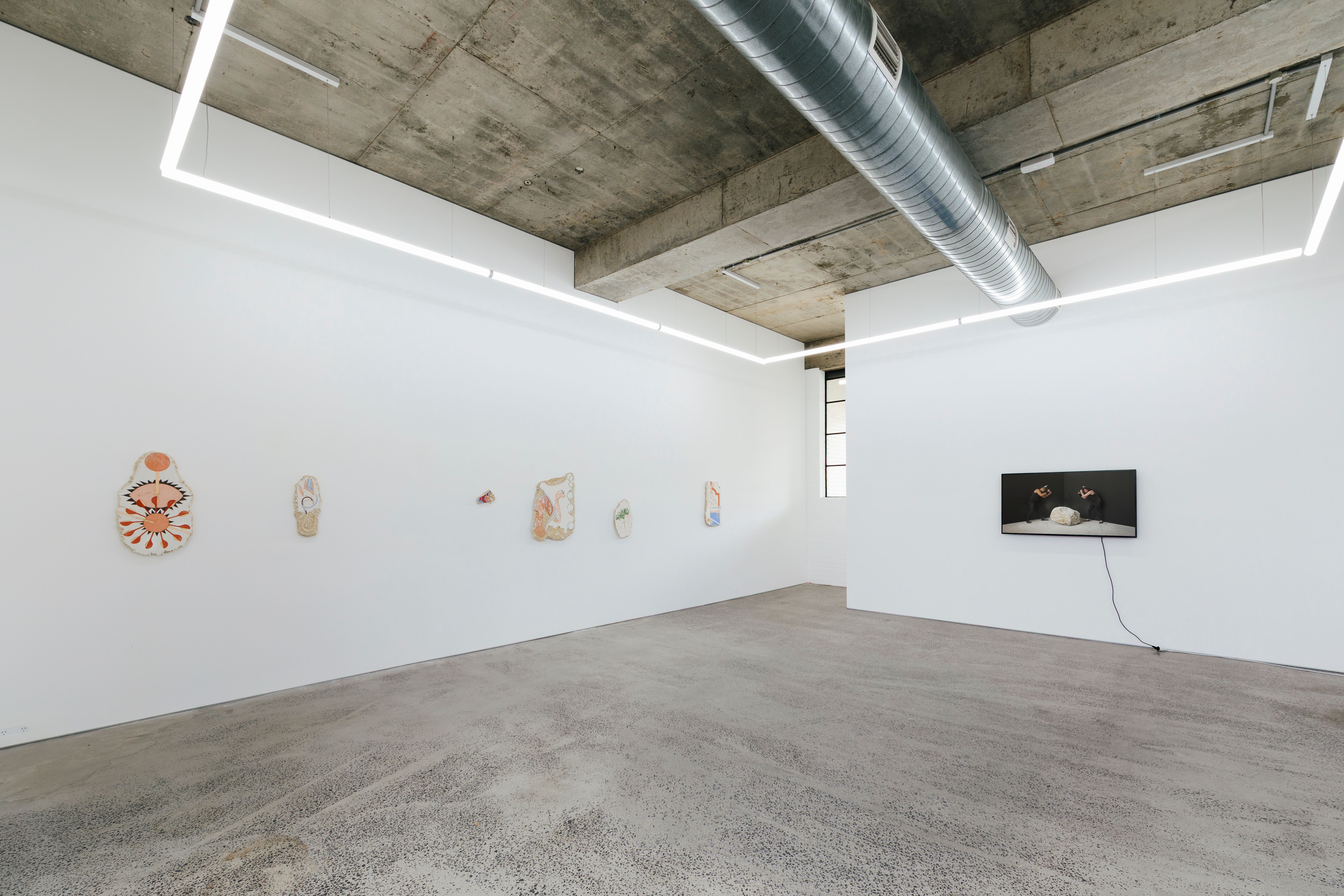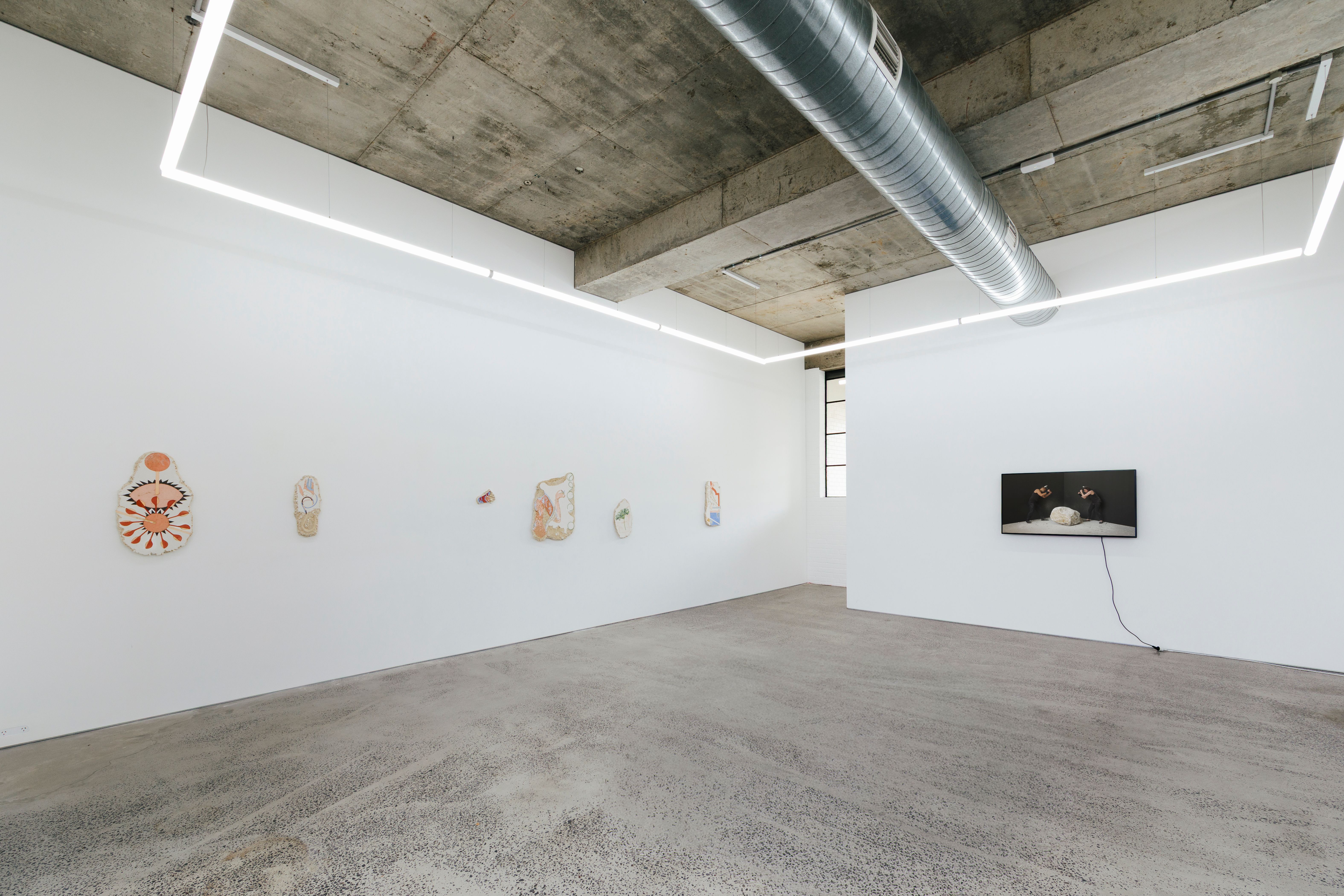
Semi Conductors brings together works by Tarik Ahlip and Emma Fielden that trace how energy moves through bodies and materials, and how such passage is never direct or complete. Force, breath, impact, resistance and resonance circulate through the space as partial transmissions—conducted, resisted, dispersed—creating a field in which two distinct works breathe into and against each other across distance and difference. 'Semi Conductors' takes its title from a class of materials that embody seemingly contradictory properties—both conductive and resistant, neither fully one nor the other. This instability becomes a lens through which to consider the essential mutability of matter and the workings of time: for Fielden, through processes that cannot be simulated in haste; for Ahlip, through historical unbridgeable distances that provide space for rediscovery and revision.
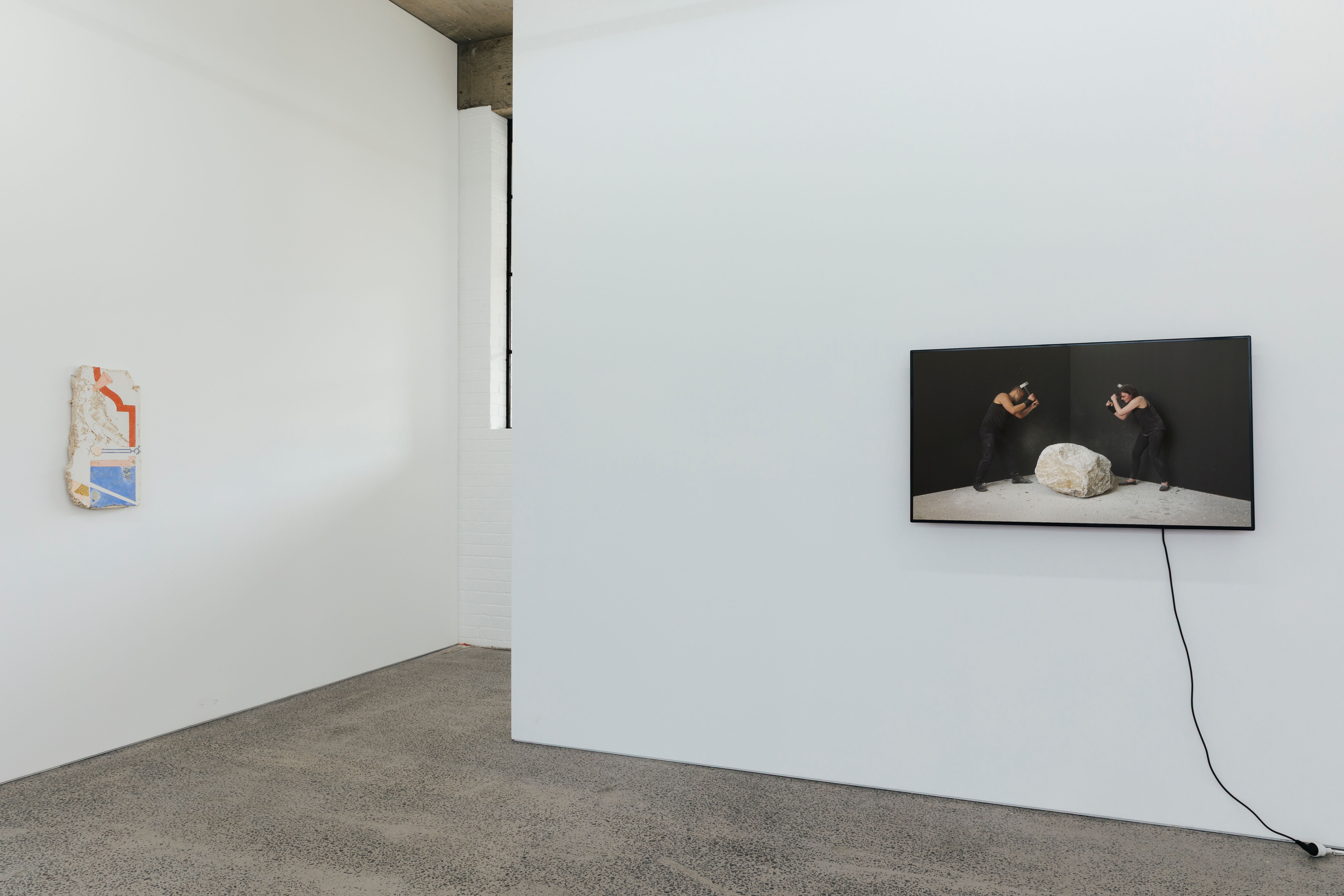
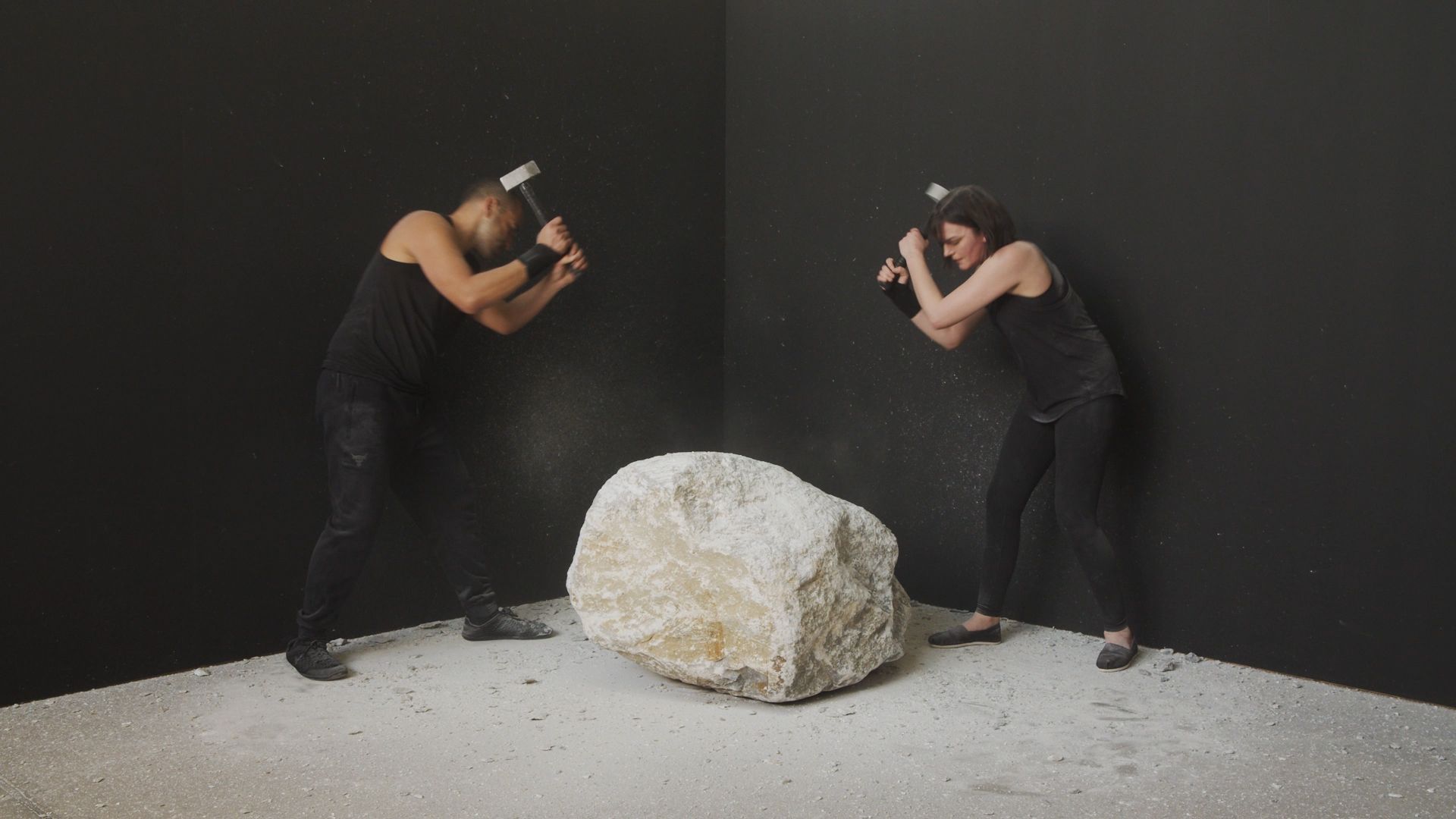
Emma Feilden's video work, 'Dialogue', 2025 is a durational performance in which two people attempt to break a one-tonne limestone boulder using only stonemasons' hammers. For eight hours they work from opposite sides of the rock, their rhythms drifting in and out of alignment as they enter, exit, rest and return. The premise is starkly simple, yet its execution is a prolonged encounter with material resistance, endurance and the limits of human intention. Rather than a coordinated effort, the action becomes a shifting negotiation: two bodies facing a single mass, neither synchronised nor opposed, continually adjusting to each other and to the stone's refusal to yield. As the boulder slowly fractures—never fully giving way—the performance accumulates a rhythm of persistence and absurd repetition, sitting in an uneasy space between purpose and futility.
Drifting through the space with 'Dialogue' is a sound recording from Fielden's recent work 'From Breath', 2025. In its full form, 'From Breath' is a performance installation in which the artist plays a giant silver flute to draw in silverpoint across a black square canvas, each exhalation producing a sustained tone while fine silver lines accumulate as a record of breath, duration and movement. Here, however, the work appears only as sound. Detached from the body that produced it and from the drawing it left behind, the audio enters the room as a spectral trace of labour, an intimate residue of an embodied act. Its continuous, breath-led tones hover in the space in stark contrast to the percussive force of Dialogue, creating a tension between impact and air, presence and absence, as two distinct energies occupy the same space while remaining fundamentally apart. Together, Fielden's two works generate a charged field in which energy moves imperfectly between force and breath, bodies and materials, presence and trace, never wholly or without loss. What moves through the space is not resolution but a taut uncertainty—an imperfect conduction that holds the space in the lingering tension between impact and air.
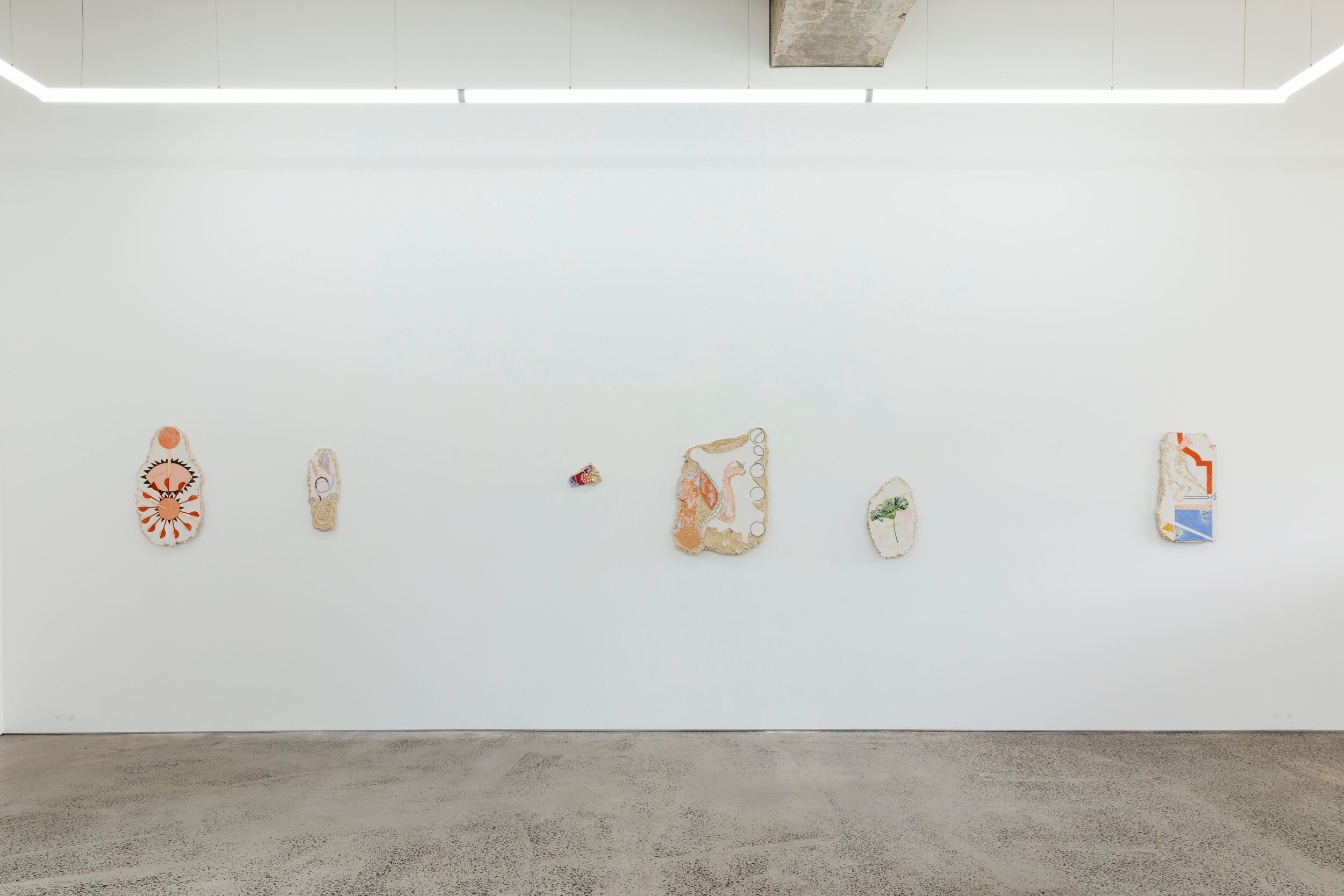
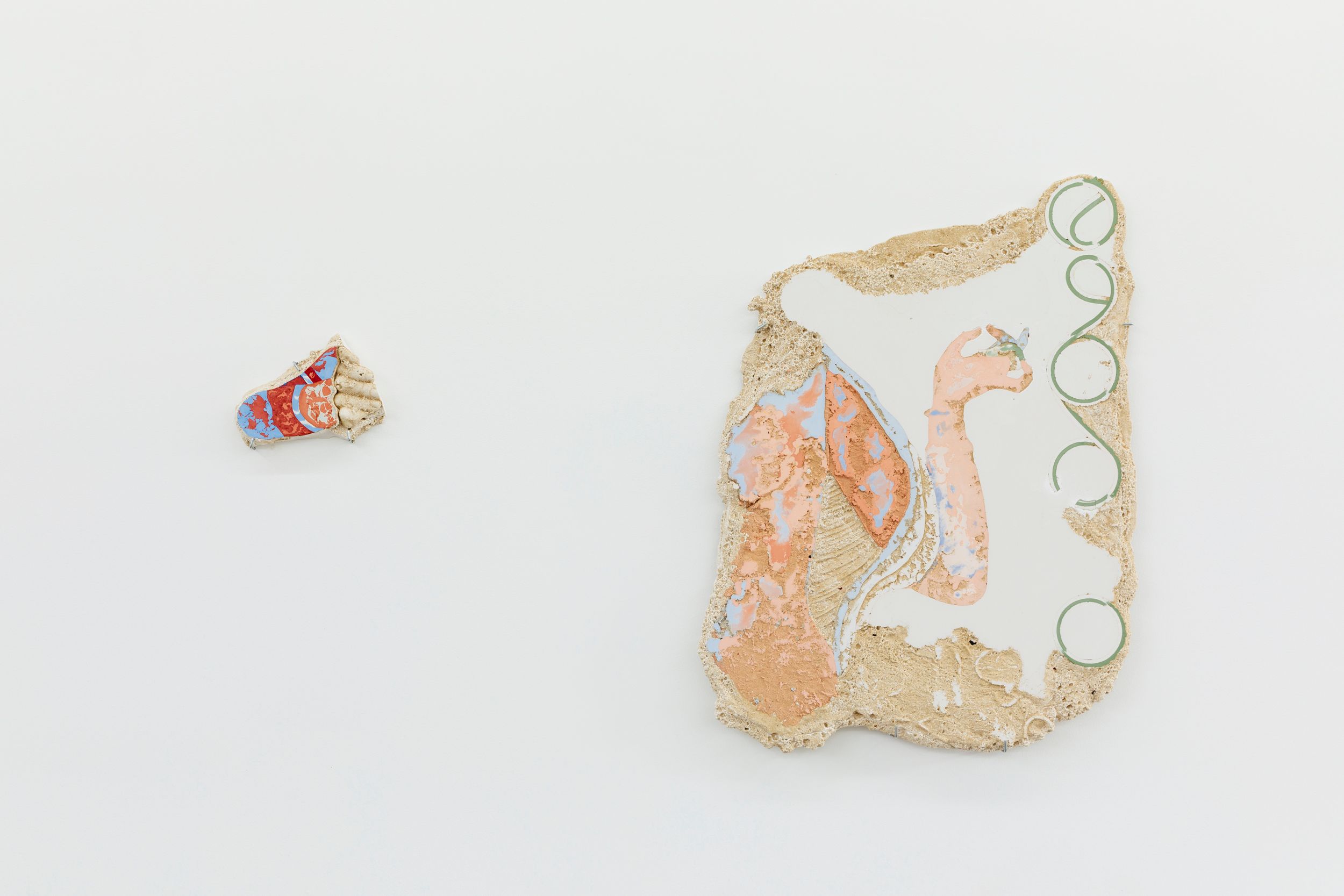
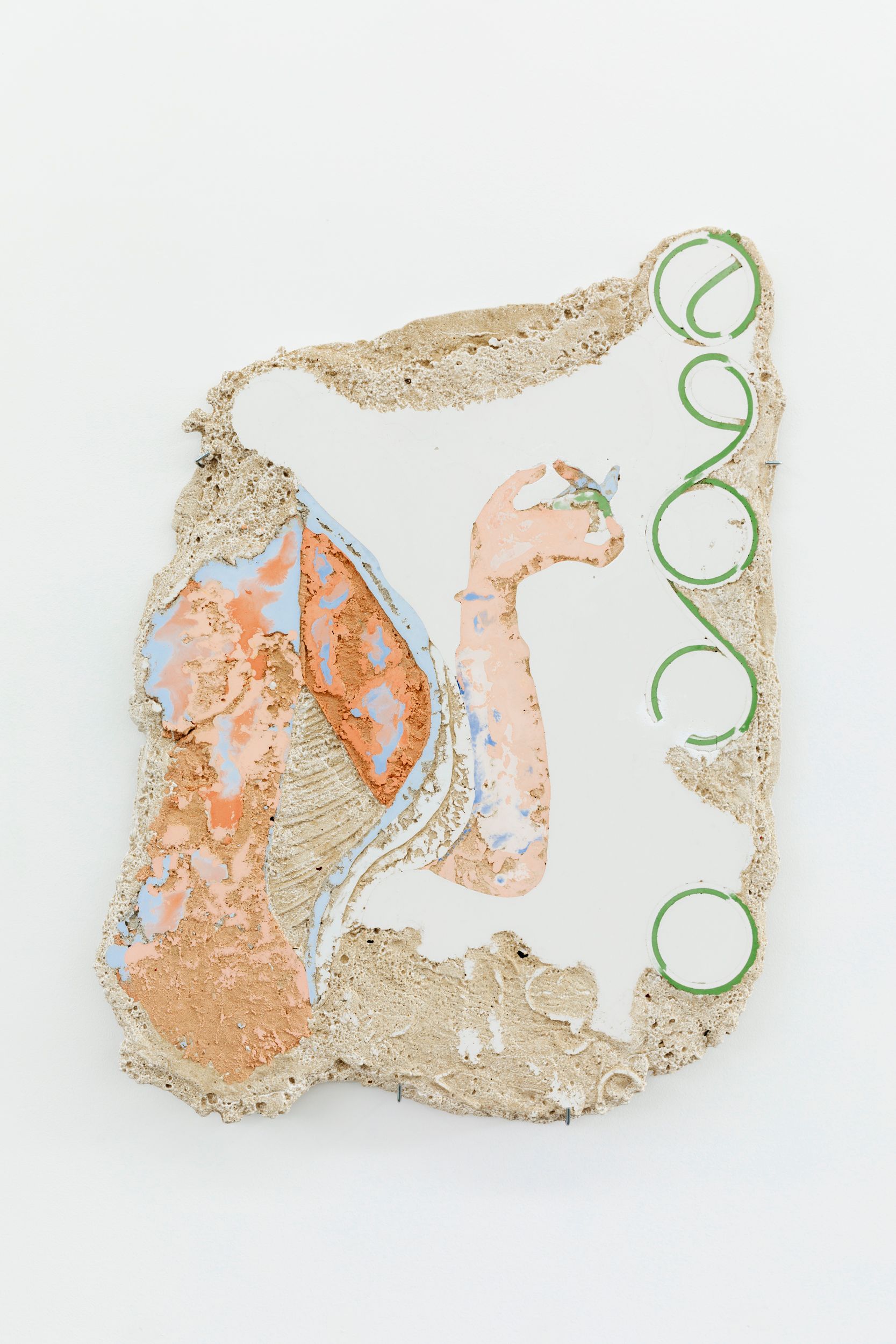
Tarik Ahlip presents sculptural wall works in plaster, pigment and sand—pieces from an ongoing body of work based on historical reproductions. The works emerge from research into a cultural latitude extending from this continent to West Asia, tracing the effects of mercantilism as a vehicle for mutual cultural imprint. This trajectory is evidenced by a traceable spectrum of linguistic and aesthetic variation—a notable example being the mutual linguistic imprints of Yolngu and Macassan languages resulting from centuries of maritime trade.
The works follow a visit to Lebanon earlier this year. Ahlip's sculptures position themselves between the instant responsiveness of the digital archive and the slow accumulation of handmade processes. The importance of maintaining specific historicity in these trajectories is heightened by the vulnerability of both tangible and intangible cultural effects—a vulnerability tied systemically to an ever-expanding, technologically accelerated archive. These works hold open the distance between the fact of the archive and the question of cultural access, staging historical forms as neither stable nor fully retrievable, but as matter subject to transformation, loss and revision across time.
Together, the works in Semi Conductors occupy a space of productive resistance—neither in opposition nor in harmony, but conducting energy, history and material presence imperfectly across the distances that separate them.